
Sterling, VA · Garage Door Service
What a Replacement Door Looks Like in Sterling
How Sterling's 1980s housing stock and severe cold winters shape the garage door replacement decision, plus what actually fails first on original hardware.
- Repairs & new doors
- Springs & openers
- Serving 5 nearby communities
What Changes With the Season
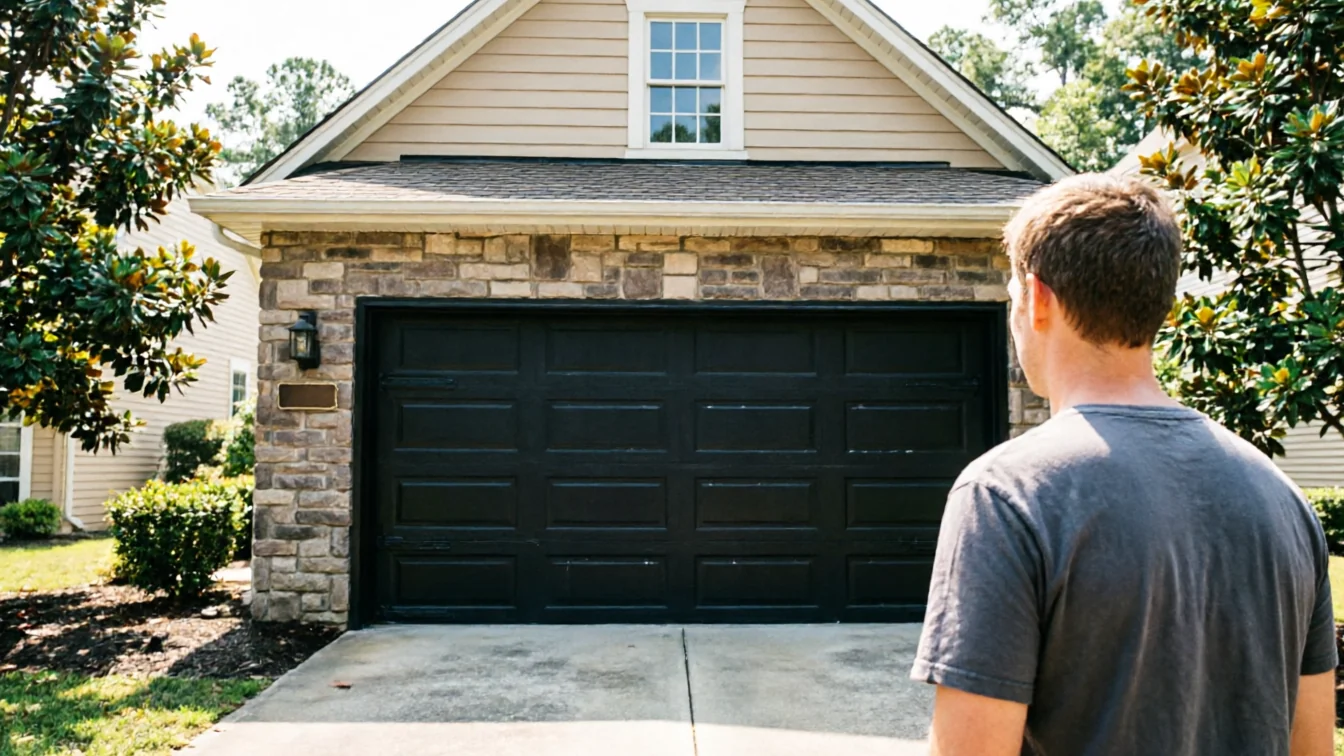
Sterling homes mostly date from 1938 through 2015, with the typical house built around 1980, and across the 31 named areas this crew works, the bulk of that stock is from the 1980s and 90s. That matters for replacement timing because doors from that era are now 30 to 45 years old. Spring tension changes with temperature swings, and steel panels that have been painted over a few times start to show their age right when the weather turns. Fall is when most Sterling homeowners start noticing the door dragging or the opener straining - the door doesn't fail on the first cold morning, it fails after a few weeks of freeze and thaw working on hardware that was never built with insulation in mind. If you're weighing a repair against a full swap, the season you're standing in tells you something: a door that's limping along in October is not going to improve by January.
This isn't a reason to panic every fall. It's a reason to look at the door before the cold sets in rather than after the opener burns out trying to force a frozen track.
The Problem
The core problem with buying a replacement door here is that so many Sterling houses carry original or first-generation garage doors from that 1980s-90s build wave. Those doors were sized and insulated for a climate expectation that didn't account for the severe end of the cold band Sterling actually sits in. A single-layer steel door with no thermal break does fine on a mild day and badly on a hard freeze - the panel contracts, the weatherstrip stiffens, and the bottom seal stops doing its job. Homeowners often try to repair around that instead of replacing, patching springs or swapping a panel, and end up spending repair money on a door that was underbuilt for the job from day one.
The honest limitation here: not every old door needs replacing. If the track is square, the springs are sized right, and the panels aren't cracked or waterlogged, a tune-up buys you real years. Replacement makes sense when the insulation and the hardware are both past it - not just one or the other.
What to Check
Before you call anyone, look at three things. First, the panel material and thickness - original 1980s steel is often a single layer with no polyurethane fill, which you can tell because it feels light and dents easily. Second, the bottom seal and the gap at the slab; original doors sized for an older build often sit higher off a settled slab than they used to. Third, the spring type - torsion springs from that era were sized for lighter, uninsulated doors, so if a previous owner ever upgraded to a heavier insulated panel without resizing the spring, the opener has been overworking ever since.
With roughly 56,559 owner-occupied houses among the 145,744 households in this service area, a lot of these checks apply house to house, not block to block - two homes built the same year can have completely different door histories depending on what got swapped out over 40 years. Don't assume your neighbor's fix is your fix.
What the Weather Here Does to It
Sterling sits in the severe end of the cold climate band, and that shows up specifically in how fast an old door degrades versus a newer one. Cold contracts steel panels and stiffens the nylon rollers that were standard through the 80s and 90s builds - the rollers crack first, usually at the bottom two sections where the door takes the most flex. An insulated door with a polyurethane core resists that swing far better, which is part of why median household income in this area, at $154,734, tends to push replacement jobs toward insulated steel or composite rather than the bare-minimum panel.
There's no way around the freeze-thaw cycle itself - that's just what a severe-cold winter does to a 40-year-old door - but there is a way to stop paying for it every year, and that's sizing the new door and spring together for the insulation level you're actually installing, not the one the house came with.
Frequently asked questions
How old does a garage door have to be before replacement beats repair in Sterling?
There's no fixed age, but doors from Sterling's common 1980s-90s build wave are now 30-45 years old, and once the panel insulation and the spring sizing are both out of date for a severe-cold climate, repeated repairs usually cost more over a few winters than one replacement.
Why do original doors on Sterling houses seem to fail more in winter?
Sterling sits in the severe end of the cold climate band. Original steel panels without a thermal break contract in hard freezes, and the nylon rollers common to 1980s and 90s builds stiffen and crack under that same cycling, so failures cluster in the coldest stretches.
Does a bigger house in this area need a different door than a smaller one?
Size matters less than build era. Among the roughly 56,559 owner-occupied houses in this service area, door problems track more closely to the decade a house was built and whether a prior owner upgraded the panel without resizing the spring, than to square footage.
Related garage door services in Sterling
More garage door guides
Book garage door service in Sterling
Call now or request a quote - tell us what the door is doing and where you are.