
Sterling, VA · Garage Door Service
What That Sound Coming From Your Garage Door Actually Means
A grinding, popping, or grating garage door in Sterling usually means something specific. Here's what each sound points to in homes built from the 1980s on, and when it's a winter problem.
- Repairs & new doors
- Springs & openers
- Serving 5 nearby communities
What Changes With the Season
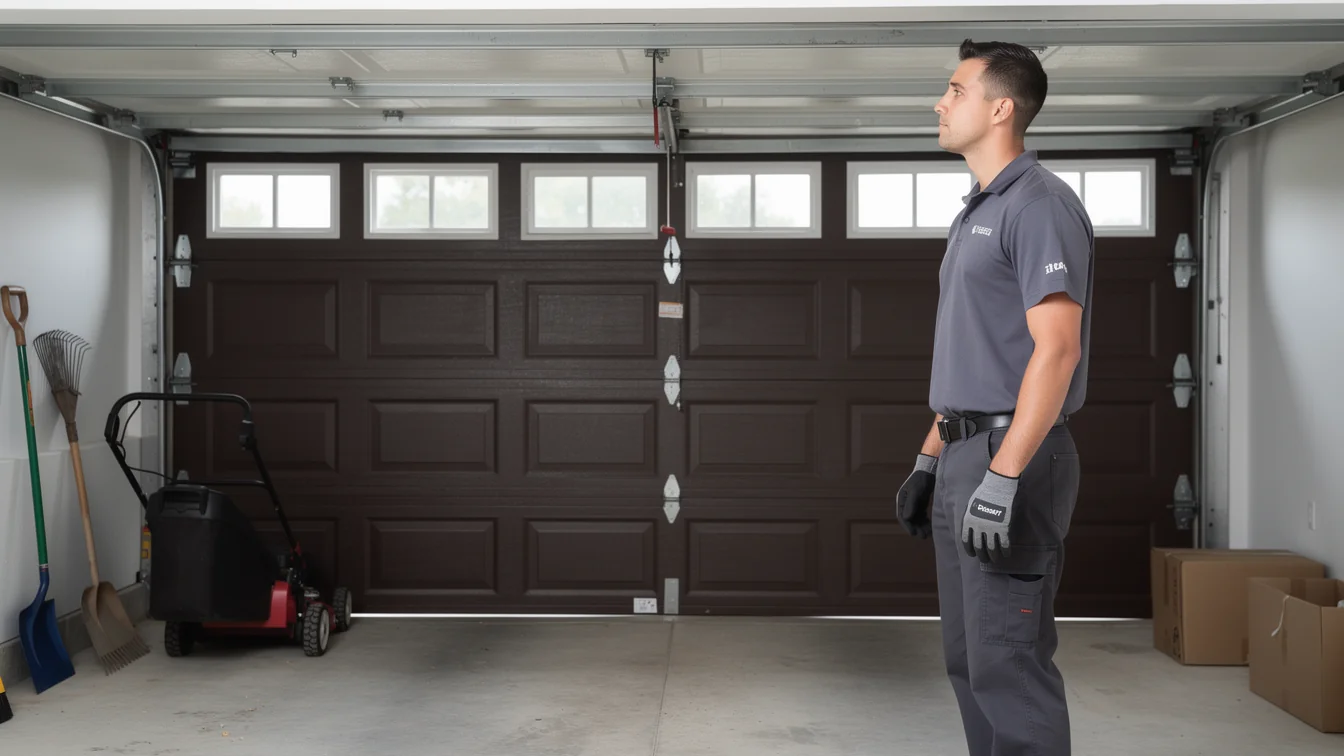
Garage doors don't make new noises out of nowhere. They start making noises you can finally hear once the season changes what's going on inside the mechanism. Sterling sits in a cold-weather climate band rated severe, and that matters more than people think for anything with steel moving parts and grease in it. Summer lubricant thins out and quiets a door down. Once temperatures drop hard, that same lubricant thickens, rollers bind slightly in the track, and a door that ran silent in August starts groaning in January. Most of the housing stock in this service area dates from the 1980s and 90s building boom, with homes going up as far back as 1938 and as recent as 2015. A door built or last serviced during that original construction wave is old enough that its springs have cycled tens of thousands of times already. Cold doesn't create the wear. It just stops hiding it. If your door went quiet-to-loud right as the weather turned, that's not coincidence, that's the hardware telling you the margin it had left just got smaller.
The Problem
A grinding noise at the top of the door's travel usually means a roller is worn down to the bearing or the track above the opener has pulled slightly away from the frame. A sharp bang followed by the door refusing to move is almost always a torsion spring letting go. A rhythmic thunk once per rotation points to a chipped roller hitting the track seam on every pass. None of these are cosmetic. A worn roller left alone eventually cracks the track it rides in. A spring that's visibly stretched or has a gap in its coils is a spring that's going to fail on its own schedule, not yours. With over 56,000 owner-occupied houses in this service area and a lot of that stock now in its third or fourth decade, we see the same handful of failure patterns on repeat, and the sound almost always tells you which one you've got before anyone opens the panel.
What to Check
Stand clear of the door and run it with the opener while you watch and listen, not with your hand on it. Check the track for daylight gaps where it bolts to the wall. Look at the springs above the door, a torsion spring with a visible separation in the coil is done, and that's not a tightening job, it's a replacement job. Listen for whether the noise happens going up, going down, or both, that narrows it to the opener chain, the springs, or the rollers. We'll say plainly what we won't do over the phone: we won't talk you through adjusting torsion spring tension yourself. That spring is wound under enough force to break a bone, and it's the one repair on this list that isn't a weekend job. Everything else on this list, loose hardware, a dry hinge, a track bolt backing out, you can safely look at and even tighten yourself before you call anyone.
What the Weather Here Does to It
Sterling's climate classification is cold and severe, which means the service area sees the kind of temperature swing that stresses metal fatigue points faster than a mild climate would. Steel contracts in the cold. A spring or cable that's already near the end of its rated cycle count is more likely to fail on a 20-degree morning than a 70-degree afternoon, because the metal has less give left in it. This is also where the age of the housing stock compounds the problem. With a median build year around 1980 across the area, a lot of doors are original enough that their hardware was never rated for the cycle counts and the cold exposure they've now logged. None of this means panic over a single loud door. It means a door that's been quietly aging for three or four decades is going to announce itself loudest in the coldest months, because that's when it has the least room left to flex.
Frequently asked questions
My garage door makes a loud bang but still opens fine, is that urgent?
Yes. A single loud bang is almost always a torsion spring breaking, even if the door still moves because the opener is doing all the lifting work the spring used to share. Running it repeatedly in that state puts strain on the opener motor it wasn't built for. Stop using it until the spring is replaced.
Why is my door louder in winter than in summer?
Cold thickens lubricant and makes steel contract slightly, both of which add friction to rollers, tracks, and springs. In a cold-climate area like Sterling, that seasonal swing is enough to turn a door that ran quiet all summer into one that grinds or groans once temperatures drop.
Is a grinding noise always the rollers?
Usually, but not always. Grinding near the top of travel often points to worn rollers or a track pulling away from the frame. Grinding lower down can mean a bent track section. Watching where in the door's travel the noise happens narrows it down before anyone has to open a panel.
Related garage door services in Sterling
More garage door guides
Book garage door service in Sterling
Call now or request a quote - tell us what the door is doing and where you are.