
Sterling, VA · Garage Door Service
What Winter Does to a Sterling Garage Door
Sterling, VA homes built mostly in the 1980s and 90s face cold-climate strain on garage door springs and seals each winter. Here's what to check now.
- Repairs & new doors
- Springs & openers
- Serving 5 nearby communities
What Changes With the Season
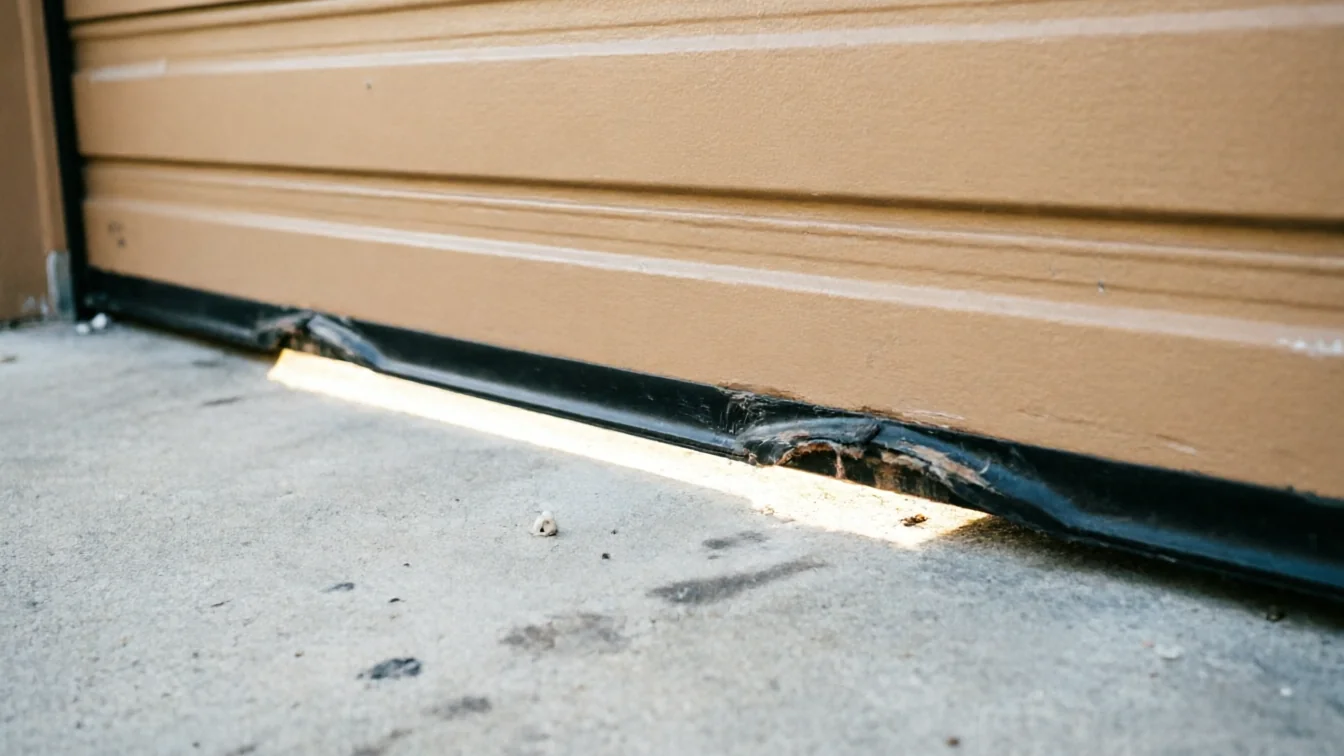
Sterling sits in a cold-severe climate band, and that matters more to a garage door than most people think. Steel contracts when it's cold, and a torsion spring that's been winding and unwinding for twenty years doesn't contract evenly. The housing stock here runs from 1938 to 2015, with a median build year around 1980, and most of what we work on falls into that 1980s-90s window - doors and openers built for a different set of expectations than what's sold today. When the temperature drops hard and stays there, the steel torsion spring tightens a notch, the nylon rollers in the track stiffen, and the rubber bottom seal that's been fine all fall suddenly can't flex enough to seat against the slab. None of this happens on a schedule. It happens the first real cold snap, usually overnight, which is why a door that worked on Sunday won't open Monday morning. The fix isn't always a new part - sometimes it's just re-tensioning or a seal swap. But the season is the trigger, every time, for a problem that was already building underneath.
The Problem
A door built or last serviced during the 1980s or 90s boom in this area is running weatherstripping and seals, and often a spring, that were never rated for the duty cycle a modern household puts on a garage door. The springs on those original installs are galvanized steel, not the coated wire used now, and galvanized coating thins over decades of expansion and contraction. Add a cold-severe winter cycle on top of that, and the metal fatigue that was slow for fifteen years speeds up fast. The seal is usually the first thing to go - it dries out, shrinks a fraction of an inch, and stops meeting the slab evenly, so you get a gap at one corner and drafts and weather seals that look fine until you kneel down and check. We can't tell you a spring will last another winter without looking at it; a torsion spring under load doesn't show visible wear the way a cable does. One honest limitation: if a door is original to a 1980s build and the spring has never been replaced, we're not going to patch it - at that age the cost of a careful repair and the cost of just swapping the spring are close enough that patching isn't worth the callback risk.
What to Check
Start with the bottom seal - press a thumb along its length on a cold morning and feel for spots where it's gone stiff or pulled away from the track. Next, look at the weatherstripping and drafts along the sides and header; in a cold-severe climate, that's where heated garage air and outside cold meet, and it's the first place condensation shows up as a dark line or a drip mark on the slab. Check the torsion spring visually for gaps between coils or a kink - don't touch it, just look. Run a hand along the track for rust or pitting, more common in older 1980s-90s installs that never had a rail upgrade. Test the opener's force setting by holding the door as it closes; if it reverses with light pressure, the limit settings have likely drifted with the cold, which is common and usually a five-minute adjustment, not a part replacement. Listen for a grinding or popping sound on the first open of the day - that's often ice or frost on the track rather than a mechanical fault, and it usually clears after the door's been run once or twice.
What the Weather Here Does to It
The cold-severe rating this area carries isn't just a number - it's the reason steel torsion springs here age faster than the same spring would in a milder climate, and why seals on a house built in the median 1980 window are usually the first repair call we get once the real cold sets in. Steel loses a measurable amount of flexibility as temperature drops, and a spring already fatigued from decades of cycles crosses from fine to failed faster than it would in September. Moisture is the other half of it: a garage that sits a few degrees warmer than outside air condenses on the inside of a metal door and the track hardware, and over a cold-severe winter that moisture cycle rusts spring coils and hinge pins from the inside, where you can't see it until something snaps. None of this is unique to one house - across the roughly 56,559 owner-occupied houses in this service area, the pattern repeats block to block wherever the build year sits in that 1980s-90s stretch. It's predictable enough that we'd rather look at a spring in November than get the call in January.
Frequently asked questions
How often should I check my garage door seal in Sterling?
Once a year, right before the cold sets in, is enough for most doors. Press along the bottom seal and the side weatherstripping for stiff or shrunk spots. If your house falls in that common 1980s-90s build window for this area, check it closer to twice a year since the rubber is older and shrinks faster once temperatures swing.
Why does my door only stick in winter?
Steel torsion springs tighten slightly as they get cold, and rubber seals and rollers stiffen too. In a cold-severe climate band like this one, that combination shows up as a door that drags or won't fully seat, even though nothing actually broke - it's the cold working on parts that were already near the end of their flex.
Is it worth repairing an original spring from an 80s-era house?
Usually not. If the spring is original to a house built in that 1980s median window and has never been swapped, the coating has thinned enough over the decades that a repair carries real risk of a second failure soon after. At that age, replacing the spring outright is almost always the better call.
Can I fix a frosty or stuck track myself?
Running the door once or twice to clear light frost is fine and often all it takes. But if you hear grinding, see rust pitting on the rails, or the door reverses on its own when closing, stop and get it looked at - adjusting opener force settings or a worn track isn't a one-time fix you want to guess at.
Related garage door services in Sterling
More garage door guides
Book garage door service in Sterling
Call now or request a quote - tell us what the door is doing and where you are.