Sterling, VA · Garage Door Service
Garage Door Roller Replacement for Sterling-Area Homes
Worn rollers on 1980s-era Sterling garage doors bind and jump track in cold weather. We replace steel and nylon rollers across the Sterling service area.
- Repairs & new doors
- Springs & openers
- Serving 5 nearby communities
Booking a Visit
Call or book through the site and we'll get a truck out to look at the rollers before anything comes off the track. Roller work is quick compared to a spring job, but we still want eyes on the door first - a bent track or a bad bearing can look like a roller problem until you're under the door with a flashlight. We cover the Sterling service area out to towns like Great Falls, Brambleton, Wolf Trap, Arcola, and South Riding, so if you're anywhere in that radius we can usually schedule within the same window. Tell us the make of the opener and roughly how old the door is when you call - it saves a trip back to the truck for the right roller size. If you've already got a roller off the track, snap a photo of the stem and send it ahead. That one detail tells us whether you need 7-ball steel, sealed-bearing steel, or nylon before the truck even leaves the shop.
Why This Fails Locally
Most of the housing stock across this service area went up between 1938 and 2015, with the median landing around 1980 - and across the 31 named areas we cover, the bulk of that stock is 1980s and 90s construction. That generation of garage door came with steel rollers riding in steel track, no nylon, no sealed bearing, nothing to cushion the ride. Twenty-plus years of use wears a groove into the roller stem, and once that groove deepens, the roller starts binding instead of rolling.
The cold makes it worse. This area sits in a severe cold climate band, and steel rollers contract in winter just enough to tighten that bind. A door that rolled fine in August starts grinding, catching, or jumping the track by January - not because anything broke overnight, but because thirty-some winters of contraction finally wore the roller past the point where it can flex. Houses built later in that 1938-2015 span sometimes shipped with nylon rollers from the factory, which age differently - they crack rather than grind - but the bulk of the stock here is steel-on-steel, and steel-on-steel is what fails on a cold morning.
The Symptom
It usually starts as a single loud spot - the door is quiet going up until it hits one point in the track, then there's a bang or a scrape, every time, same spot. That's a roller with a flat-spotted bearing or a worn stem catching the track seam. Left alone, it gets worse: the bang becomes a grind, then the door starts walking sideways in the track instead of staying square in both rails.
In the cold snaps that come with this area's severe winter band, the symptom sharpens fast. A roller that was merely noisy in October can jump the track entirely in January, because the metal has less give. If you hear a new noise right after the first hard freeze, that timing is not a coincidence - it's usually the last few percent of life finally dropping out of an old roller.
One thing to rule out yourself before calling: check that the noise isn't coming from the opener chain or a loose hinge screw. Rollers make a rolling noise, mechanical and rhythmic, one bang per roller per cycle. A loose hinge rattles randomly and a dry chain hums. If you can count the bangs with the door's travel, it's the rollers.
What the Repair Takes
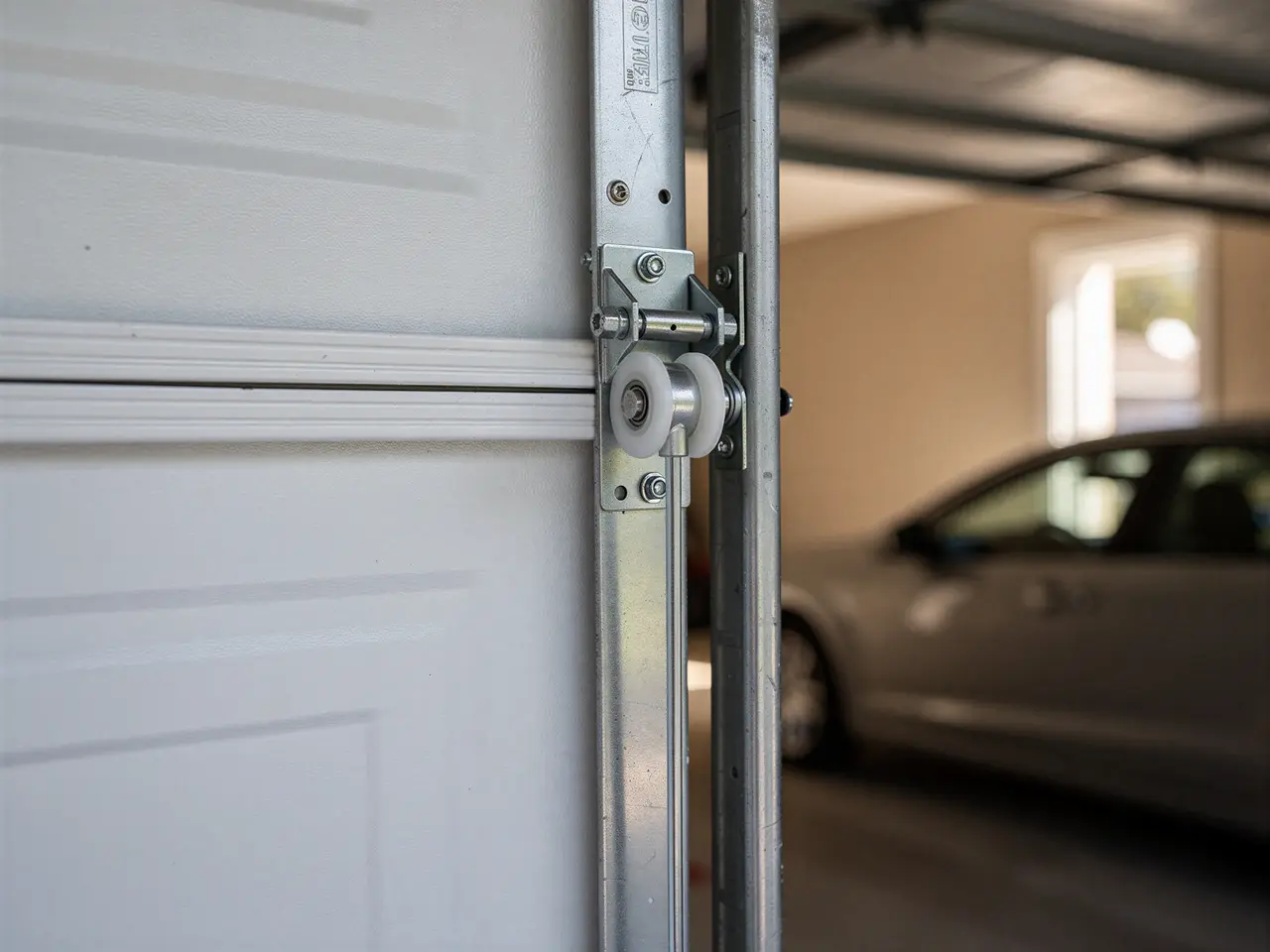
A full roller replacement on a standard double door means pulling ten rollers, two per hinge point plus the end rollers, and setting new ones without letting a panel drop out of alignment. On steel rollers we usually move customers to sealed-bearing steel or nylon, both of which hold up better through repeated winters than the open steel rollers that shipped on most doors from the 1980s and 90s stock common here. We do not recommend nylon on a door where the opener is already underpowered for the panel weight - nylon rollers add a small amount of drag at first, and a weak opener will show it. That's a call we make on site, not over the phone.
The job itself runs well under an hour on a door with no other issues. Where it runs long is when a worn roller has already chewed up the track it rode in - at that point you're replacing track sections too, which is a different estimate. We'll tell you straight if that's what we're looking at before we start charging for parts you don't need.
Frequently asked questions
How do I know if it's the rollers and not the springs?
Rollers make a rhythmic banging or grinding noise tied to the door's movement - one sound per roller per cycle. A spring problem usually shows up as the door feeling heavy, refusing to stay open, or a loud bang from the spring itself when it breaks. If the door still opens and closes under its own power but sounds rough doing it, that points to rollers.
Will nylon rollers fix the noise for good?
Nylon rollers run quieter than steel and don't develop the same bearing wear, but they're not immune to failure - they crack with age instead of grinding. They're a solid upgrade from the steel rollers common on this area's 1980s and 90s housing stock, but we'll check your opener's power rating first since nylon adds slightly more drag.
Why does the noise get worse in winter?
This area sits in a severe cold climate band, and steel contracts in the cold. A roller that's already worn has less clearance to work with once temperatures drop, so a noise that was minor in fall can turn into a track jump during the first hard freeze.
Related services
By Neighborhood
Roller Replacement across the Sterling area
We also handle roller replacement in these Sterling-area suburbs.
Book garage door service in Sterling
Call now or request a quote - tell us what the door is doing and where you are.