
Sterling, VA · Garage Door Service
Installing a New Garage Door in Sterling, VA
Replacing an original 1980s builder-grade garage door in Sterling, VA? See what installation involves, common failure signs, and what the job actually takes.
- Repairs & new doors
- Springs & openers
- Serving 5 nearby communities
Booking a Visit
Most installation calls start the same way: you tell us the door size, whether it's a single or double bay, and what's wrong with what's there now - sagging, daylight at the bottom, an opener that groans before it moves. We measure the opening, check the track and header clearance, and quote the install based on what we find, not a phone guess. Standard sizes we usually have on hand or can get within a short window. Custom widths, unusual carriage-style panels, or anything that needs a header modification takes longer to source - we'll tell you that up front rather than promise a date we can't hit. That's the one honest limit on this job: if you want a specific insulated panel in a less common size, expect the parts lead time to run longer than the labor does. You can start the process at Sterling Garage Door Pros. We serve Sterling, VA and the surrounding area, and we'll give you a real install date once we've seen the opening, not before.
Why This Fails Locally
Housing in this service area was mostly built between 1938 and 2015, with the typical house dating to around 1980, and most garage doors across the area's 31 named communities are original builder-grade units put in during the 1980s and 90s. Those doors were single-layer steel, no thermal break, no foam core - fine for the mild years but not built for decades of freeze-thaw cycling. Sterling sits in a cold, severe-winter climate band, and that combination is what ends these doors: steel contracts in the cold, the seams at the bottom and sides open up a hair more each winter, and the hardware that was torque-spec'd for a lighter door forty years ago starts working loose under a panel that's now slightly warped. It isn't one bad winter that does it. It's forty winters on a door that was never insulated to begin with, in a region that was never mild enough to let that slide.
The Symptom
You'll usually notice it before you can name it. The door looks a little off-square in its frame, or there's a visible gap of daylight along the bottom weatherstrip even when it's fully down. On the coldest mornings you might see frost forming on the inside face of the panels, because there's no insulation layer to stop the house-side air from meeting the cold steel. The opener starts working harder - longer pause before it catches, a grinding sound partway through the cycle - because it's now compensating for a panel that doesn't sit flat anymore. Some owners notice the door is just loud in a way it wasn't five years ago, the rollers catching on a track that's taken on a slight bow from decades of a heavier, sagging door pulling on it. None of these on their own means replace it today. Together, on a door that's been in place since the house was built, they mean the door has reached the end of what repair can fix.
What the Repair Takes
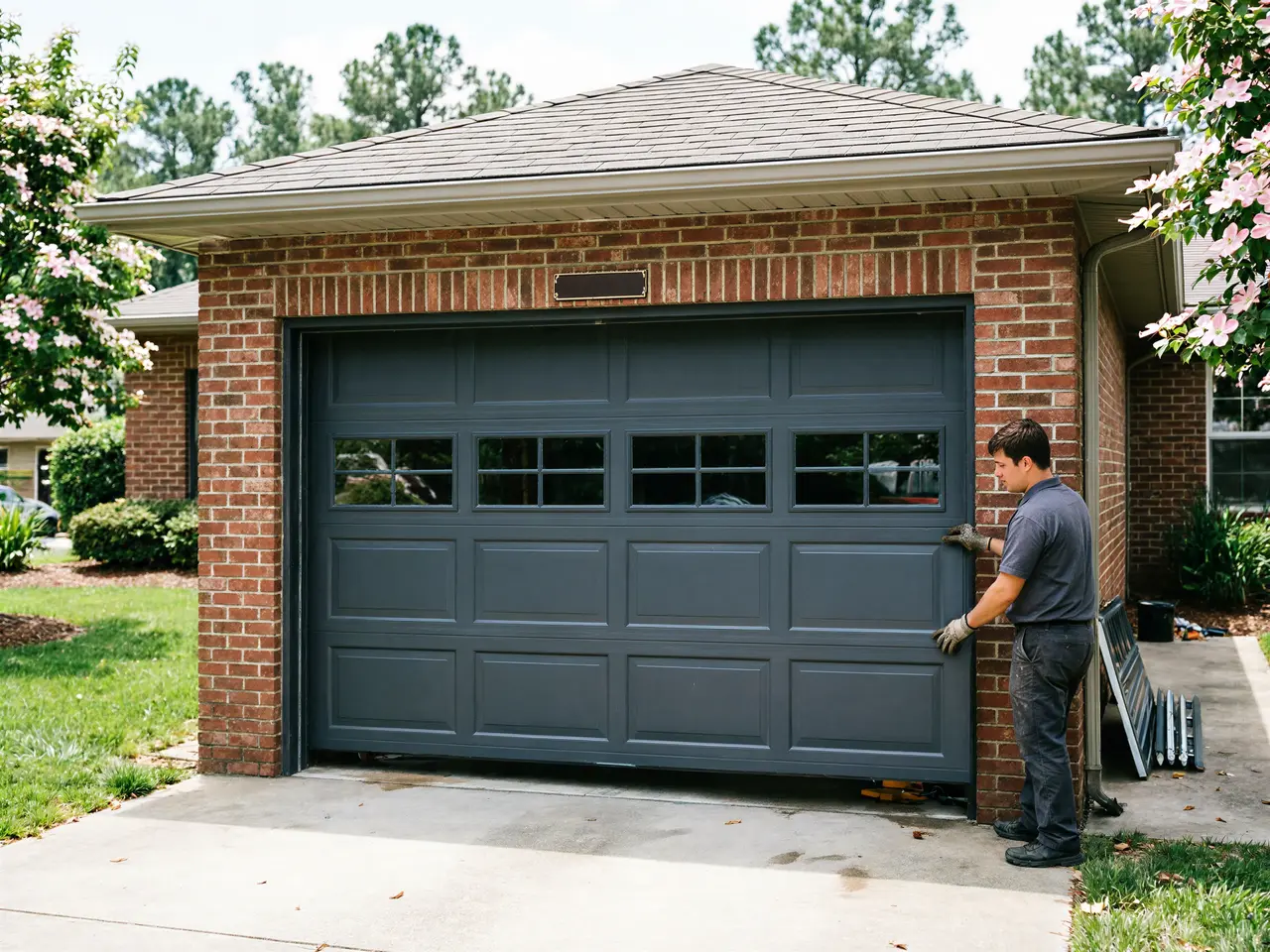
A full install starts with pulling the old door off its track - panels, cables, springs, the works - and checking the track and header for damage from years of a misaligned door pulling at the hardware. If the jambs are square and the header's sound, the new door goes in on fresh track with springs sized to the new door's actual weight, not a leftover set from the old one. We set the opener's travel limits and force settings from scratch, since those numbers change with a different door. For anyone in this area replacing an original builder door, the upgrade that actually matters is the insulated core - it's the difference between a door that sweats and frosts on the inside in winter and one that doesn't. A straightforward single-door swap is usually a one-day job start to finish. Double doors, oversized openings, or anything needing header work take longer, and we'll walk you through that timeline before we start, not after.
Frequently asked questions
How old does a garage door have to be before replacing makes more sense than repairing it?
If the door is original to a house built in the 1980s or 90s - common across this area - and you're seeing gaps, frost on the inside, or an opener straining through the cycle, you're usually past the point where a new spring or a panel swap fixes it. At that age the track and hardware are often worn to match the old door's sag, not a square opening.
Does an insulated door actually matter in a Sterling winter?
Yes. This area sits in a cold climate with real winter severity, and an uninsulated steel door - which is what most original builder-grade doors here are - lets cold transfer straight through to the garage side. An insulated core cuts that transfer and stops the frost buildup you get on an old single-layer panel.
How long does a standard installation take?
A single-door install on a standard size, with a square opening and sound track, is typically a one-day job. Double doors, nonstandard widths, or openings needing header work take longer, and any less common panel size adds to the parts lead time before we can even start.
Book garage door service in Sterling
Call now or request a quote - tell us what the door is doing and where you are.