
Sterling, VA · Garage Door Service
What Winter Does to an Older Sterling Garage Door
Sterling homes built before 1980 often have uninsulated steel doors that struggle in a cold-climate winter. Here's what to check before the next cold snap.
- Repairs & new doors
- Springs & openers
- Serving 5 nearby communities
What Changes With the Season
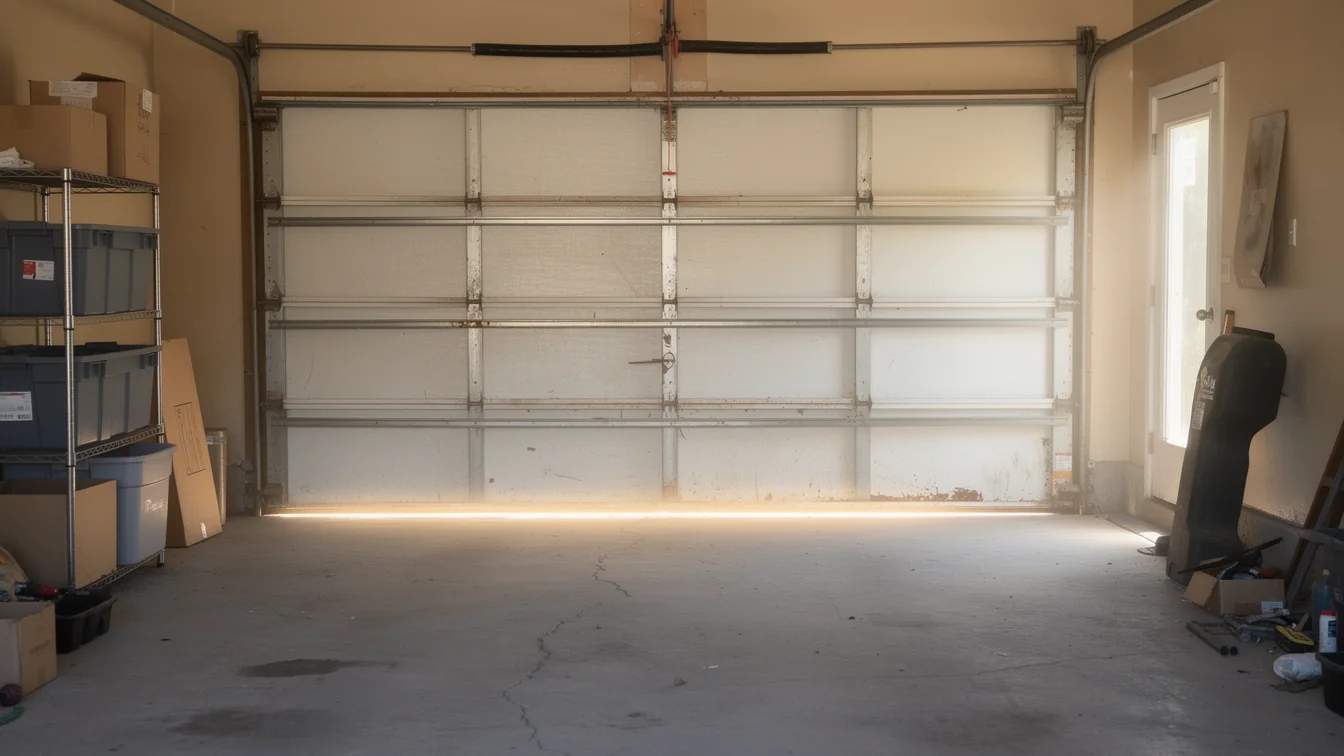
A lot of Sterling's housing dates back to a stretch between 1938 and 2015, with the median build landing around 1980 - right at the edge of when insulation standards for garage doors started showing up in new construction. That means a meaningful share of doors in this area are either original single-layer steel panels or early replacements that never got a thermal break. Come winter, those doors do something newer insulated doors don't: they transmit cold straight through the steel skin into the garage, and from the garage into whatever's on the other side of that shared wall - often a laundry room or a bedroom above. You'll notice it as a cold floor, a chilly wall, or condensation beading on the inside of the door panel itself. None of that happens on a modern polyurethane-core door, which is part of why the age of the door matters as much as the age of the house. If your house falls in that 1960s-1980s build window common across this part of the area, it's worth checking which kind of door you actually have before the hard cold sets in.
The Problem
An uninsulated steel door is just a thin sheet of metal with ribs stamped in it for stiffness, and metal moves with temperature. In a severe cold climate like this one, that panel contracts on a hard freeze night and expands again once the sun hits it, and it does that cycle over and over across a winter. On a door that's thirty or forty years old - common given the median 1980 build year across this area - that repeated flexing works on the seams, the weatherstrip channel, and the spot welds holding the panel sections together. You get gaps at the bottom seal that let a draft through, hinges that work a little looser each season, and sometimes a panel that's visibly bowed where it never used to be. None of this is dramatic on its own. It's slow. But it adds up faster on an old uninsulated door than it does on anything built after insulation became standard, because there's no foam core holding the steel rigid against the temperature swing.
What to Check
Start at the bottom seal - the rubber strip along the floor. On an older door this is usually the first thing to crack or flatten, and a flattened seal in a cold-climate winter means snowmelt and wind both get under the door instead of staying outside. Next, run a hand along the inside of the panel on a cold morning. If it's noticeably colder than the surrounding wall, or you see moisture forming on the steel, that's the uninsulated core doing exactly what it does - no mystery there, just physics working against an old panel. Check the weatherstrip around the sides and top too; on doors from the 1980s stock common across this area, that stripping is original more often than not and it's long past flexible. Last, look at the panel seams themselves for daylight gaps when the door's shut. One honest note: if you're seeing daylight at more than one seam, or the panel's visibly bowed, that's not a weatherstrip fix - that's a door that's worth replacing rather than patching.
What the Weather Here Does to It
This area sits in a cold-severe climate band, which means the freeze-thaw cycle isn't a once-a-winter event - it repeats through the season, and that repetition is what wears out an old door faster than age alone would. Each freeze tightens the steel and each thaw loosens it, and on a door without a foam core to resist that movement, the hardware takes the strain: hinges, rollers, and the spring system all work harder to compensate for a panel that isn't holding its shape. Owners in houses built nearer that 1980 median often ask why their door feels stiffer in January than it did in October - this is the reason, and it's specific to the door's age and construction, not something that happens to every door everywhere. A door built to current insulation standards shrugs this off. An older, uninsulated one doesn't, and the gap between the two only gets more obvious as each winter here runs its course.
Frequently asked questions
How do I know if my garage door has insulation or not?
Check the inside of the panel. An insulated door has a foam-filled back with a finished interior surface, usually white or textured. An uninsulated door shows bare ribbed steel on the inside with nothing behind it. If your house falls near that common 1980s build era in this area, it's worth a quick look before assuming either way.
Is it worth insulating an old steel door instead of replacing it?
Retrofit insulation kits exist, but on a door that's already decades old with worn hardware and seams, you're often spending money on a panel that's near the end of its working life anyway. For most older doors in this area, replacement with an insulated door solves both the cold problem and the wear problem at once.
Why does my garage door feel stiffer in the cold?
Steel contracts in cold weather, and on an uninsulated door there's no foam core to resist that movement. The panel tightens slightly against the track and hardware, which is why older doors in a cold-severe climate like this one often feel sticky or heavier to lift on the coldest mornings.
Related garage door services in Sterling
More garage door guides
Book garage door service in Sterling
Call now or request a quote - tell us what the door is doing and where you are.