
Sterling, VA · Garage Door Service
When a Sterling Garage Door Won't Open in a Cold Snap
Sterling's 1980s-era homes are hitting original torsion spring failure, and cold winters make it worse. Here's why it happens here and what fixing it actually takes.
- Repairs & new doors
- Springs & openers
- Serving 5 nearby communities
Booking a Visit
Most calls start the same way: the door won't budge, or it opens a few inches and stalls. Tell us what you're seeing and hearing - a loud bang before it quit, a door that feels heavier than it used to, an opener motor that strains and clicks back off. That tells us more than the model number does.
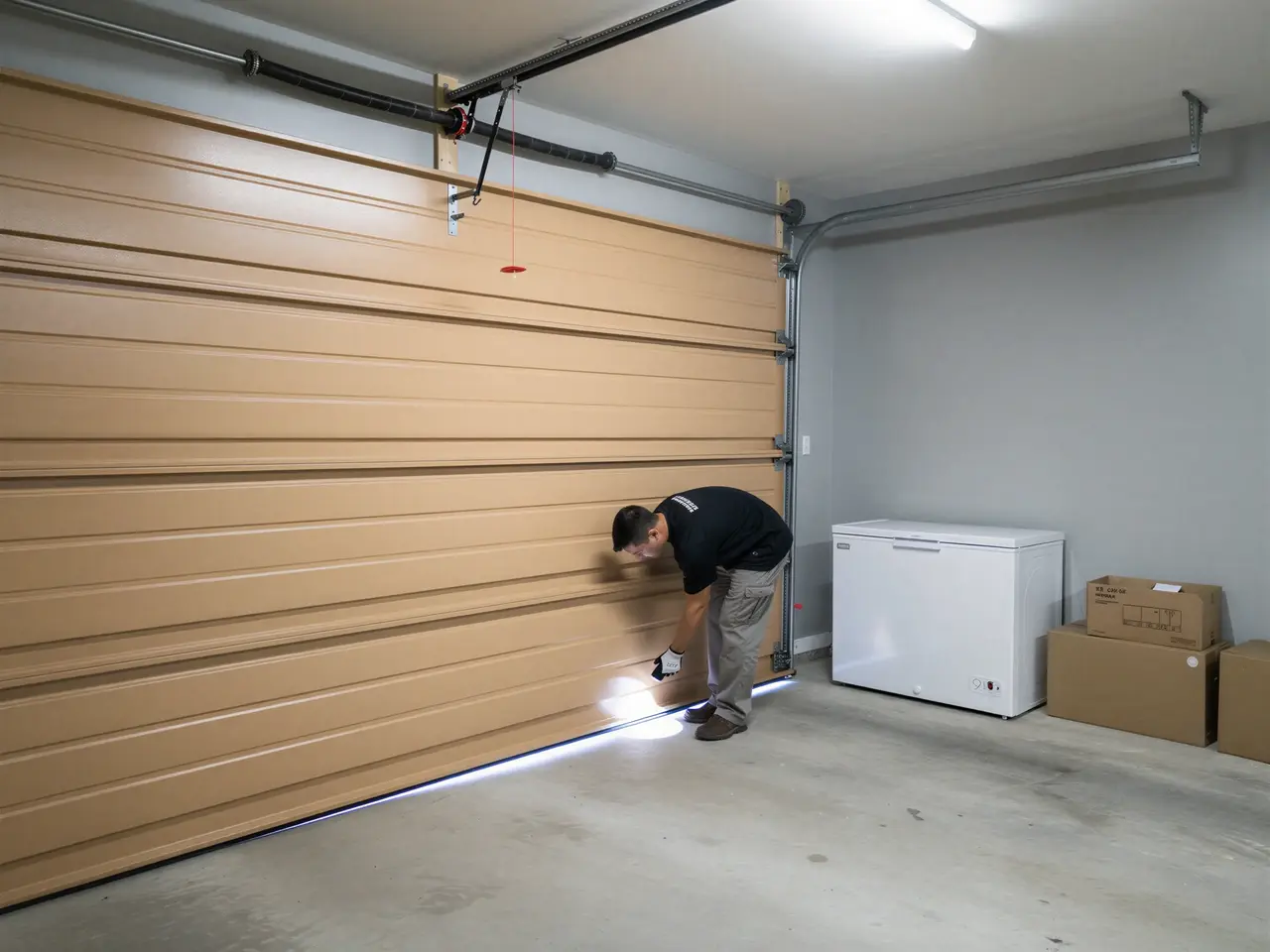
We schedule the visit, take a look at the spring, track, and cable setup, and give you a straight answer on the same trip: what broke, what it takes to fix it, and what it costs before any tool comes out. If the fix is a spring swap, we usually carry the common torsion sizes used on doors from this area's main building era, so the job doesn't always need a second trip.
You can reach us through the site to get a visit on the books. We don't do phone quotes sight unseen for spring work - torsion springs are wound under real tension, and the right size depends on door weight and drum setup, not a guess over the phone.
Why This Fails Locally
Housing in this service area was mostly built between 1938 and 2015, with the bulk of it - across the 31 named communities we see work in, from Great Falls to Purcellville - going up in the 1980s and 90s construction wave, median build year around 1980. That matters because a torsion spring has a rated life measured in open-close cycles, not years, and a 35-to-45-year-old spring on a door that's been used daily is well past due whether it looks fine or not.
Cold is the other half of it. This area sits in a severe cold-winter climate band, and steel spring steel gets more brittle and less forgiving as temperatures drop. A spring that's been slowly fatiguing for two decades often picks a freezing morning to finally let go, because the cold coil has less give left when the door takes its first lift of the day.
Put those two together - original-era hardware plus a hard winter - and you get the pattern we see over and over on doors in this area: fine in October, gone by January.
The Symptom
The classic sign is a door that won't lift past a few inches, paired with an opener that groans or reverses itself instead of finishing the job. Sometimes there's a loud bang from the garage first - that's the spring letting go, not the opener failing.
A softer version of the same problem: the door feels noticeably heavier when you try to lift it by hand, or the opener seems to be working harder than it used to over a few weeks before it finally quits. That's a spring losing tension gradually rather than snapping outright, and it's just as much a spring job even though nothing broke with a bang.
One thing this is not: if the door opens and closes fine but makes noise doing it, or drifts off its track, that's usually rollers or alignment, not the spring. We've had calls booked as spring jobs that turned out to be a bent track instead - worth saying, because the fix and the cost are different, and we'd rather tell you that on the visit than sell you a spring you don't need.
What the Repair Takes
For a standard single spring on a one-car door, it's usually a straight swap - unwind the old spring, fit the replacement sized to the door's weight and drum setup, wind it to spec, and test the balance by hand before we touch the opener again. For a double door running two springs, we replace both even if only one broke, because a mismatched pair just means the second one fails a few months later under uneven load.
What we don't do: we won't talk you into a full door replacement when a spring swap and a cable check solve the problem. Replacement makes sense when the door itself is warped, rusted through, or the track is bent beyond adjustment - not just because it's old.
The honest limitation: certain torsion spring sizes for wider or taller doors aren't something we keep on the truck year-round, and those can mean a short parts wait rather than a same-visit fix. We'll tell you on the spot if your door needs one of those, rather than improvising with a close-enough spring that throws the balance off.
Frequently asked questions
Why did my garage door spring break in the middle of winter?
Cold makes spring steel stiffer and less forgiving, and this area's winters run cold enough to push an already-fatigued spring past its limit. Most springs here are original to houses built in the 1980s and 90s construction wave, so by winter they're often decades past their rated cycle count - the cold just picks the moment.
Can I replace just one spring if I have a double door?
You can, but we don't recommend it. A double door runs two matched springs, and replacing only the broken one leaves a mismatched pair carrying uneven tension. That usually means the older spring fails again within months, so most jobs replace both at once.
How do I know it's the spring and not the opener?
If the door won't lift past a few inches, reverses on its own, or the opener motor strains and clicks off, that points to a spring that's lost tension or broken outright. An opener problem usually shows up as the motor running but the door not moving at all, or the remote not responding.
Related services
Related guides
By Neighborhood
Garage Door Repair across the Sterling area
We also handle garage door repair in these Sterling-area suburbs.
Book garage door service in Sterling
Call now or request a quote - tell us what the door is doing and where you are.