
Sterling, VA · Garage Door Service
What We Actually Check When We Come Out to Your Door
Sterling homes built between 1938 and 2015 face real winter stress on garage door hardware. Here's what our service call actually checks and why it matters here.
- Repairs & new doors
- Springs & openers
- Serving 5 nearby communities
What Changes With the Season
Sterling sits in a cold-and-severe climate band, and that means the swing between a 20-degree January night and a humid July afternoon puts real stress on steel track, nylon rollers, and torsion springs. Metal contracts in the cold and expands in the heat, and a door that rolled smooth in October can bind by December. Lubricant that worked fine in summer gels up when the mercury drops, which is why a service call in late fall looks different from one in July. We're not selling a seasonal tune-up package - we're telling you that the tolerances on your hardware shift with the weather here, and a call in the cold months checks different things than a call in the heat. If your opener has started straining or your door shudders on the way up once the temperature drops, that's the cold doing exactly what it does to steel every year in this area.
The Problem
Housing stock across the service area runs from 1938 up through 2015, with the median build year landing around 1980, and most of the 31 named communities we cover carry hardware that dates to that 1980s-90s wave of construction. That means a lot of doors on original torsion springs and track that's thirty-plus years old, holding on by habit more than by spec. A spring rated for a certain number of cycles doesn't care how careful you've been with the door - it wears out on a clock, and in a cold climate that clock runs faster because cold steel is more brittle under load. The problem isn't that these doors were built wrong. It's that they were built for a different decade's weather exposure and they've been quietly aging past their rated life ever since. By the time a spring snaps or a cable frays, it's usually been showing small signs for months: a grind on the way up, a slight sag on one side, an opener working harder than it used to.
What to Check
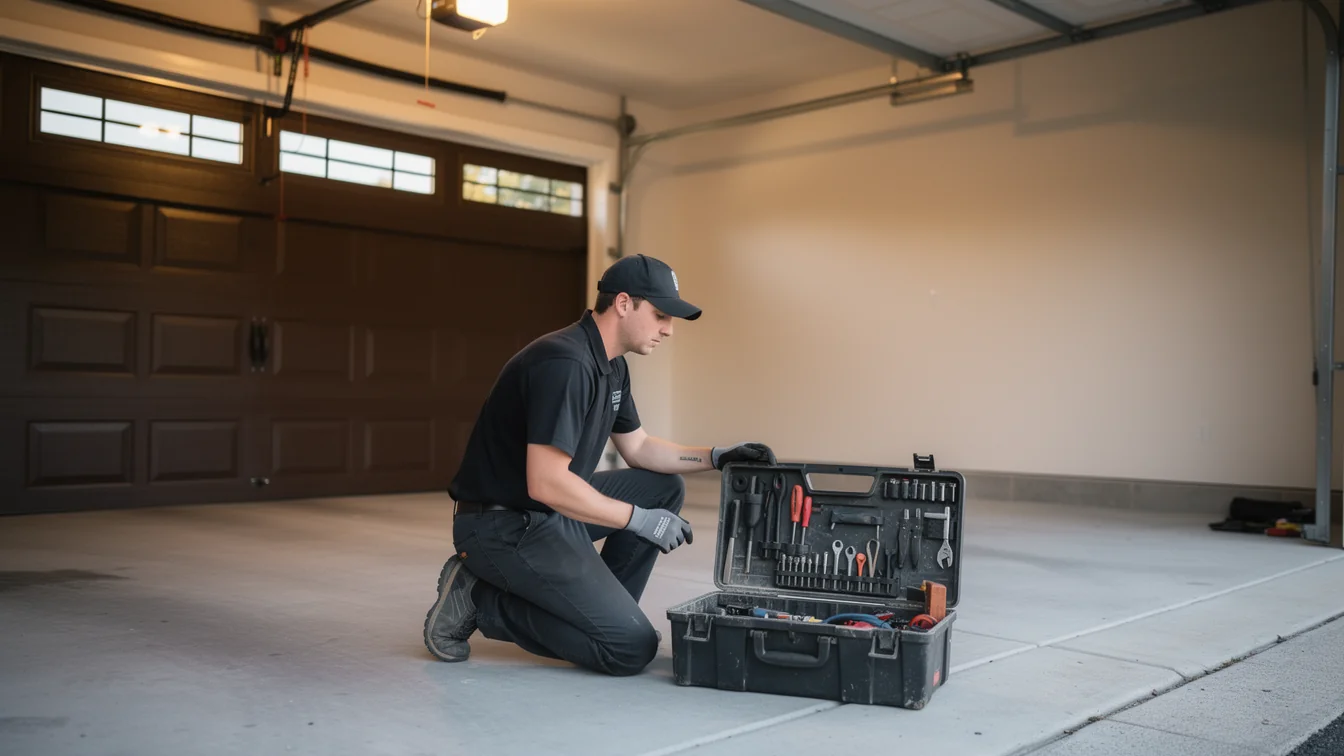
On a service call we start with the springs, since a worn torsion spring is the most common reason a door gets heavy or uneven, especially on houses with that 1980s-90s hardware. Next is the track alignment - cold contraction can pull brackets just enough to throw a roller off true, and you'll hear it before you see it. We check cable wear at the drum, since fraying there is a slow process that cold weather speeds along. The opener gets a look too: force settings that were fine when the door was lighter on its springs can start over-straining the motor as the springs weaken. We also check weatherstripping at the bottom panel, which matters more here than it would in a mild climate, since a gapped seal lets cold air and moisture straight into the garage. What we don't do on a standard call is rebuild a door that's structurally failing - if the panels themselves are cracked or the track is bent beyond adjustment, that's a replacement conversation, not a repair one.
What the Weather Here Does to It
Cold-and-severe conditions don't just slow a door down, they shorten the working life of everything that moves. Grease stiffens, rubber seals lose flexibility, and steel springs lose a bit of tensile give every freeze-thaw cycle. Across the households we see in this area - and there are over 145,000 of them, with roughly 56,500 owner-occupied houses in the mix - the ones with original hardware from that 1980s-90s build wave are the ones calling us most in the first hard cold stretch of the season. It's not bad luck. It's thirty-year-old steel meeting its first real winter test since the last homeowner ignored a squeak. We can't stop that aging process, and we won't pretend a lubricant or a tightened bolt resets the clock on a spring that's near the end of its cycle count. What a service call does is tell you honestly which parts are still good for another winter and which ones aren't worth gambling on.
Frequently asked questions
How often should I get my garage door checked in Sterling?
There's no fixed interval that applies to every door, but if your house falls in that 1980s-90s build range common across this area, a check before the first hard freeze each year catches most problems while they're still cheap to fix - a loose bracket instead of a snapped cable.
Why does my door act up more in winter?
Cold steel contracts and stiffens, lubricant thickens, and any hardware that was already near the end of its life gets pushed over the edge faster. In a cold-and-severe climate band like ours, winter is when thirty-year-old torsion springs usually give out.
Will you just tell me to replace the whole door?
No. If the springs, cables, or track can be repaired and the panels are sound, we say so. We only recommend full replacement when the structure itself is failing - cracked panels or track damage that adjustment won't fix.
Do you cover areas outside Sterling itself?
We work across the wider service area, including communities like Great Falls, Brambleton, and South Riding within a short drive of Sterling.
Related garage door services in Sterling
More garage door guides
Book garage door service in Sterling
Call now or request a quote - tell us what the door is doing and where you are.