
Sterling, VA · Garage Door Service
Why a Door Jumps Its Track in Sterling
Sterling homes built from the late 1930s through 2015 carry track hardware suited to mild winters. Here's what the cold does to it and what to check before it fails.
- Repairs & new doors
- Springs & openers
- Serving 5 nearby communities
What Changes With the Season
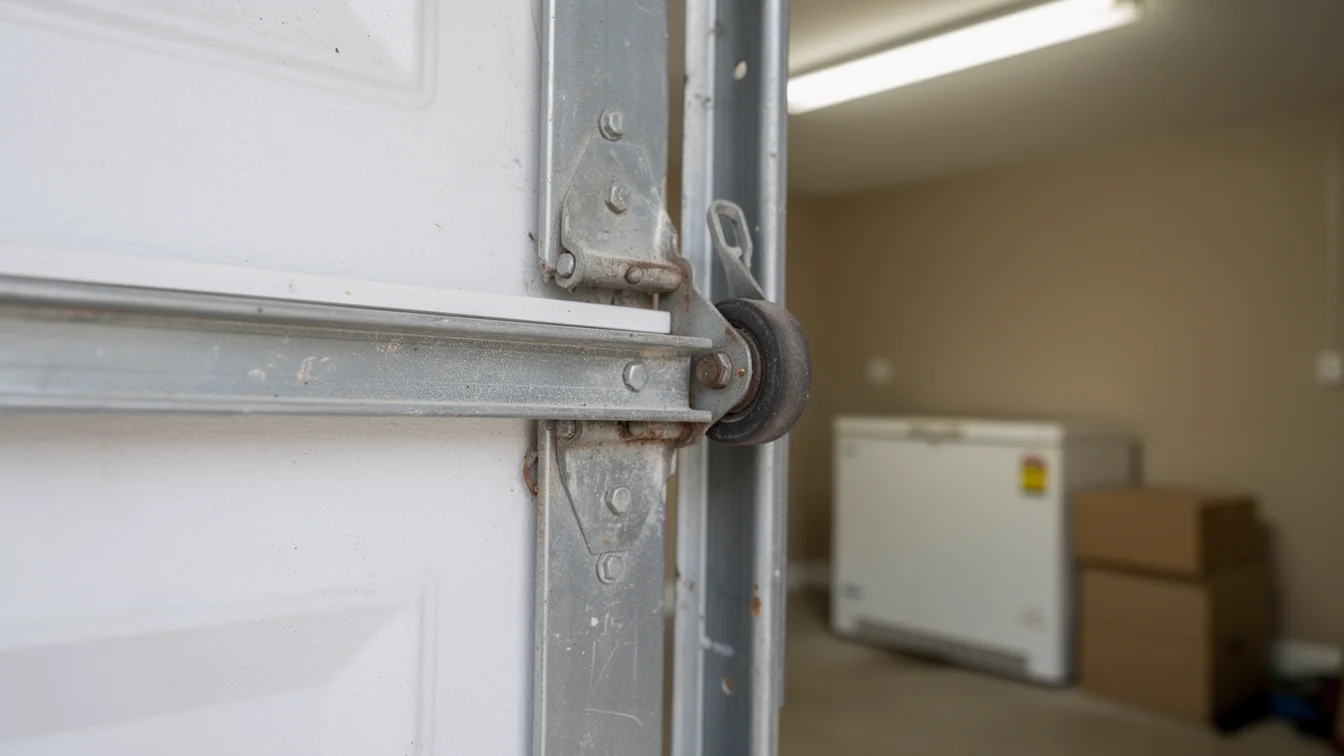
Sterling sits in a cold-severe climate band, and that matters more to a garage door than most owners think. Steel track brackets contract when the temperature drops hard overnight, and the lag screws holding them to the jamb loosen by fractions of a millimeter every cycle. On a house built in the 1960s or 70s - common across this area, where the housing stock runs from 1938 up through 2015 with a median build year around 1980 - those brackets have had forty-plus winters to work themselves loose, one freeze-thaw at a time. You won't see it happen. You'll just notice the door starts to shudder at the same spot every time it passes the second roller from the top. That shudder is the first sign the track and the door are no longer perfectly parallel. Early fall and the first hard cold snap of the year are when this shows up most, because that's when the bracket finally gives past the point where the rollers can ride it out. A door that ran fine in August can jump by the second week of real cold. It's not a coincidence - it's the same hardware meeting a different load.
The Problem
A door off track isn't usually one failure - it's a chain of small ones. A bent roller stem from age, a bracket pulled a quarter-inch loose from the jamb, a cable that's gone slack because a spring is losing tension. Any one of those, on its own, might not cause a derailment. Together, under the stress of a cold snap tightening the steel and a motor pulling at full force, the door walks sideways off the track rail instead of riding straight up it. Homes built before the 1980s in this area often still have the original steel track, narrower than what's installed today, with less tolerance for a bent rail or a warped panel. That narrower margin means a problem that would just cause noise on a newer door can cause a full derailment on an older one. The honest limitation here: once a door has come off track and a panel has bent in the process, you're usually looking at panel replacement, not a bend-back repair. Steel doesn't forgive a hard derailment the way it forgives a slow bracket slip.
What to Check
Start at the brackets - the metal pieces holding the vertical track to the frame. Grab the track with one hand and shake it gently. Any play, any visible gap between bracket and jamb, means it's worked loose. Next, look at the rollers themselves where they meet the track; a roller that's worn oval instead of round, or one that's visibly bent, won't ride straight no matter how tight the track is. Check the cable on each side of the door - they should look identical in tension. A cable that's frayed or sitting looser than its pair usually means a spring issue, not a track issue, but it'll still pull the door crooked. Last, look at the horizontal track near the back of the garage for any sag; on older homes in this area, that's often where the original hanging hardware has rusted or bent slightly over the decades. None of this requires taking the door apart. It requires a flashlight and five minutes before you run the opener again.
What the Weather Here Does to It
The cold doesn't just stiffen the lubricant on the track - it changes the geometry of the whole system. Steel track contracts measurably in a hard freeze, which is enough to turn a bracket that was snug in July into one with real play by January. Garages across the area, from the older sections near Great Falls and Dunn Loring to the newer builds out toward South Riding, deal with the same swing, but the age of the hardware is what decides whether it holds. A door on a bracket set installed in the 1980s has had decades of that cycle; a door on a bracket set from a 2015 build hasn't. If your door has started riding rough only since the weather turned, that timing is the tell - it's not a coincidence, and it's worth checking the brackets before the next cold night does the rest of the work for you.
Frequently asked questions
Why does my door only act up when it's cold out?
Steel track and brackets contract in a hard freeze, which tightens tolerances that were already loose from age. A bracket with a little play in warm weather can let the rollers wander off true once the metal shrinks in the cold, which is why problems often show up with the first real cold snap of the season rather than gradually.
Can I just push the door back onto the track myself?
You can sometimes reset a roller back onto a track if it's only partway off and the door isn't under spring tension in a bad position. But if a panel has bent or a cable has come loose from the drum, pushing on it can make things worse or let the door drop. Shut the opener off and don't force it.
Is my house's age part of why this is happening?
Likely yes. Homes in this area built from the late 1930s through the 2000s, with a lot of stock from the 1980s and 90s, often still run original track and bracket hardware. That hardware wasn't designed to be replaced piecemeal, so decades of freeze-thaw cycles add up to exactly the kind of bracket slip that causes a derailment.
Related garage door services in Sterling
More garage door guides
Book garage door service in Sterling
Call now or request a quote - tell us what the door is doing and where you are.