
Sterling, VA · Garage Door Service
Garage Door Repair for Springfield's 1970s Homes
Springfield, VA homes built mostly in the 1970s run original torsion hardware. Sterling Garage Door Pros repairs springs, openers, and tracks on site.
- Repairs & new doors
- Springs & openers
- Serving 5 nearby communities
Why This Fails Locally
Start with the number that actually matters: median household income here runs $123,691. Across the rest of the service area we cover from Sterling, the figure is $154,734 - a real gap, and it changes the math on whether a door gets fixed or replaced. At $123,691, a $200 spring job is an easy yes. A $1,400 full-door swap is a conversation, not a given, and a lot of Springfield owners want the repair option explored first before anyone talks replacement.
The housing explains why that conversation keeps coming up. Springfield's median year built is 1974, a decade ahead of the broader service area's median of 1980. That decade matters on a garage door: these houses were built with the torsion hardware, drums, and cable routing standard to the early-to-mid 1970s, much of it never upgraded since. With about 10,415 households in Springfield against 145,744 across the territory, this pocket is smaller than the newer subdivisions we also cover - but the doors in it are older on average, and older doors fail in more specific ways than a newer double-door opener glitch.
We're not guessing at this from a spreadsheet. The repair call in a 1974 house and the repair call in a house built in 2005 are different calls before the truck even leaves Sterling.
What the Repair Takes
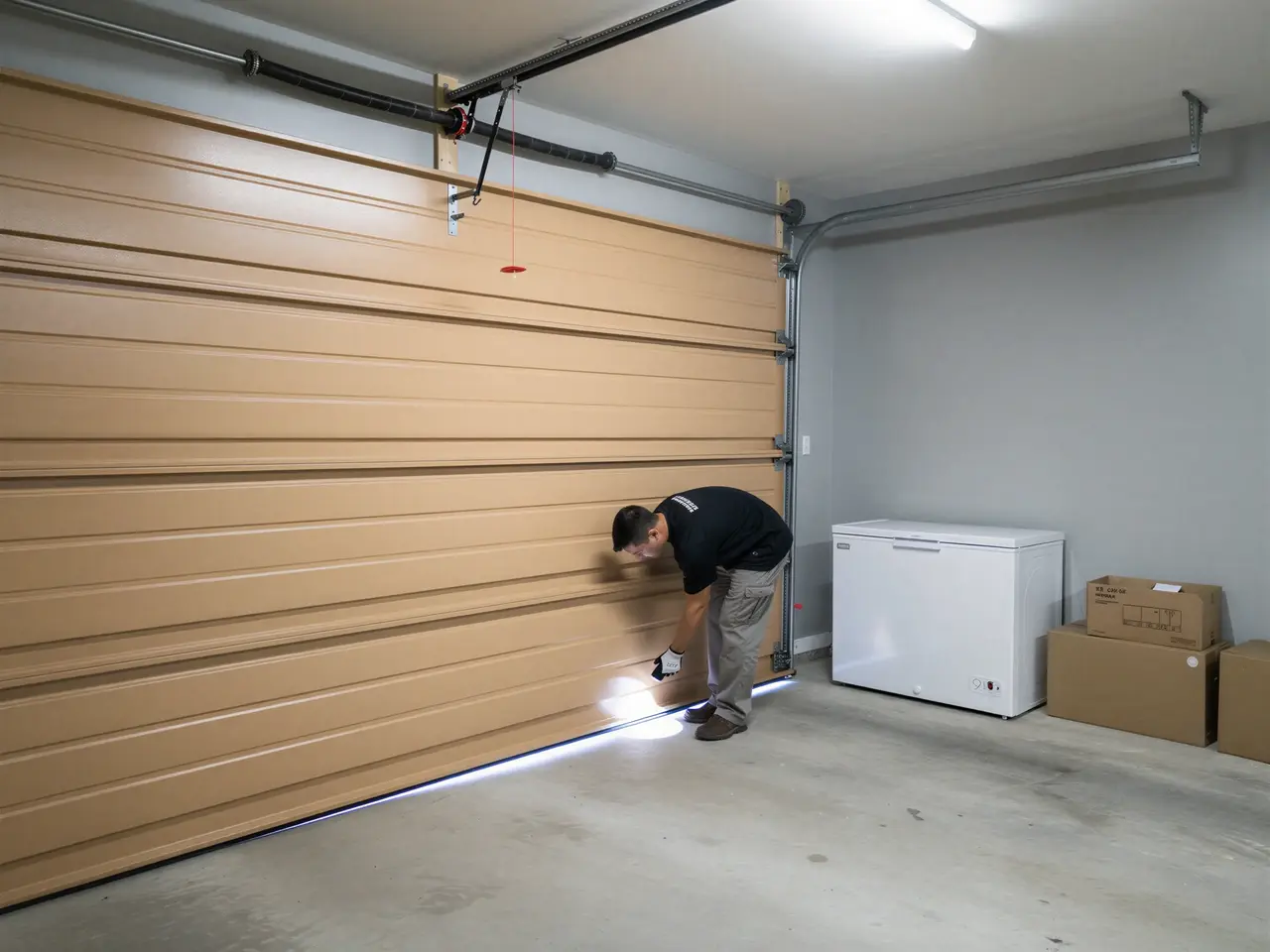
On a door from the early-to-mid 1970s, the first thing we check isn't the opener - it's the spring system and the drum assembly behind it. A lot of these doors still run original torsion springs, and original means forty-plus years of wind-up cycles on steel that was never rated for this climate band. We're in a cold-climate severe zone here, and cold steel is brittle steel. Springs that have cracked slowly over a decade tend to let go all at once, usually on the coldest morning of the week.
Track alignment is the second common point of failure. Original steel tracks on a 1970s door were bolted to framing that's since settled, and side-mounted hardware that was never designed for a modern heavier insulated panel tends to bind before it breaks outright - you'll feel it as a door that strains or stutters partway up.
Honest limitation: on some of the oldest torsion hardware we find a casing size or drum pitch nobody stocks fresh anymore. When that happens, the fix sometimes means swapping the full spring-and-drum unit rather than a single part, because a one-off match isn't something we carry on the truck. We'll tell you straight when that's the case instead of promising a quick patch that won't hold.
Booking a Visit
We run this call out of Sterling, about 20 miles from Springfield, so we're not a same-day walk-in shop sitting around the corner. When you call, tell us the age of the house if you know it - a 1970s build changes what we bring on the truck versus a newer one. We schedule the visit, diagnose on site, and quote the repair before any work starts.
Because of the distance, we ask for a clear description of the symptom up front: door won't open, door is off track, spring snapped, opener runs but door doesn't move. That lets us load the right spring size and hardware before we drive, rather than diagnosing blind and making a second trip. Use the link below to get in touch.
What Can Go Wrong
The most common failure we see on Springfield's older stock is a torsion spring that's been cycling for decades finally reaching its fatigue limit, usually in a cold stretch when the steel is stiffest and least forgiving. Second most common: cable fraying at the drum, which on original hardware often hasn't been inspected or lubricated in years.
Openers fail too, but less dramatically - a worn gear in an older chain-drive unit, or a sensor that's drifted out of alignment after the door itself has shifted on settled framing. On a 1970s house, those two problems often show up together, because the opener was working around a door that was already slightly out of true.
What doesn't usually go wrong: panels themselves. Steel panels from this era were built heavy and most of what we see is cosmetic dents, not structural failure. If your door looks rough but still runs true on the track, that's often a repair, not a replacement - one more reason the income math from the first section tends to favor fixing over swapping on these houses.
Frequently asked questions
Is my garage door too old to repair if the house was built in the 1970s?
Not usually. Original torsion springs and tracks from that era can almost always be repaired or swapped for modern equivalents. The exception is a rare original drum or casing size nobody stocks anymore - in that case we replace the full spring-and-drum assembly rather than patch a mismatched part.
Do you have a branch in Springfield?
No. We run this service out of Sterling, about 20 miles away, and schedule the visit rather than offering a walk-in counter. Tell us the symptom clearly when you call so we can bring the right spring size and hardware on the first trip.
Why does my spring keep breaking in winter?
We're in a cold-climate severe band here, and steel torsion springs get more brittle as temperatures drop. On an original spring that's already decades into its fatigue life, a cold morning is often the final straw rather than the cause.
Is it cheaper to repair than replace?
Often yes, especially on Springfield's 1970s stock where income levels here tend to favor repair first. A spring or cable job usually runs far less than a full door swap, and most panels from this era hold up fine structurally even when the hardware behind them doesn't.
More garage door services in Springfield
Book garage door service in Sterling
Call now or request a quote - tell us what the door is doing and where you are.