
Sterling, VA · Garage Door Service
Garage Door Repair for Wolf Trap's 1980s Housing Stock
Wolf Trap homes mostly went up around 1981, which means aging extension springs and steel doors are common. We drive out from Sterling, 8 miles away, to fix them.
- Repairs & new doors
- Springs & openers
- Serving 5 nearby communities
Booking a Visit
We're based in Sterling, about 8 miles from Wolf Trap, and we run calls out there on the regular. There's no branch office in Wolf Trap itself - the truck comes from Sterling, loaded for the kind of doors this neighborhood tends to have. When you call, tell us the door's rough age and whether it's one spring or two across the top. With a build era centered around 1981, most of what we see here is original steel doors or a first-generation replacement from the 90s, and knowing that before we leave the shop means we show up with the right torsion or extension hardware already on the truck instead of guessing.
What Is on the Truck
For a neighborhood built mostly in the early 1980s, the truck carries standard-lift extension springs in the common sizes from that era, plus torsion conversion kits for owners who've already upgraded or want to. We stock steel rollers and the galvanized cable gauges that matched doors built before the mid-90s shift to heavier gauge standard. Openers get a mix of chain-drive units, since that's what a lot of these garages were fitted with originally, along with the sensor brackets and wiring needed when a door's safety-eye setup predates current code. We don't carry every obscure bracket ever made - if a door needs a part specific to a builder-grade model from that period, that sometimes means a short wait, which we'll tell you up front rather than pretend otherwise.
The Symptom
The most common call out of Wolf Trap is a door that won't lift past a foot off the ground, or one that drops suddenly on the way down. On a house from this era, that's almost always an extension spring that's stretched out or snapped on one side, because doors going up in 1981 were built with extension springs riding along horizontal tracks far more often than the torsion bar setups that came standard later. A close second is a cable that's frayed through near the bottom roller bracket - the original galvanized cable on a door this age has had four decades of cold Virginia winters to work on it, and it shows.
Time on the Job
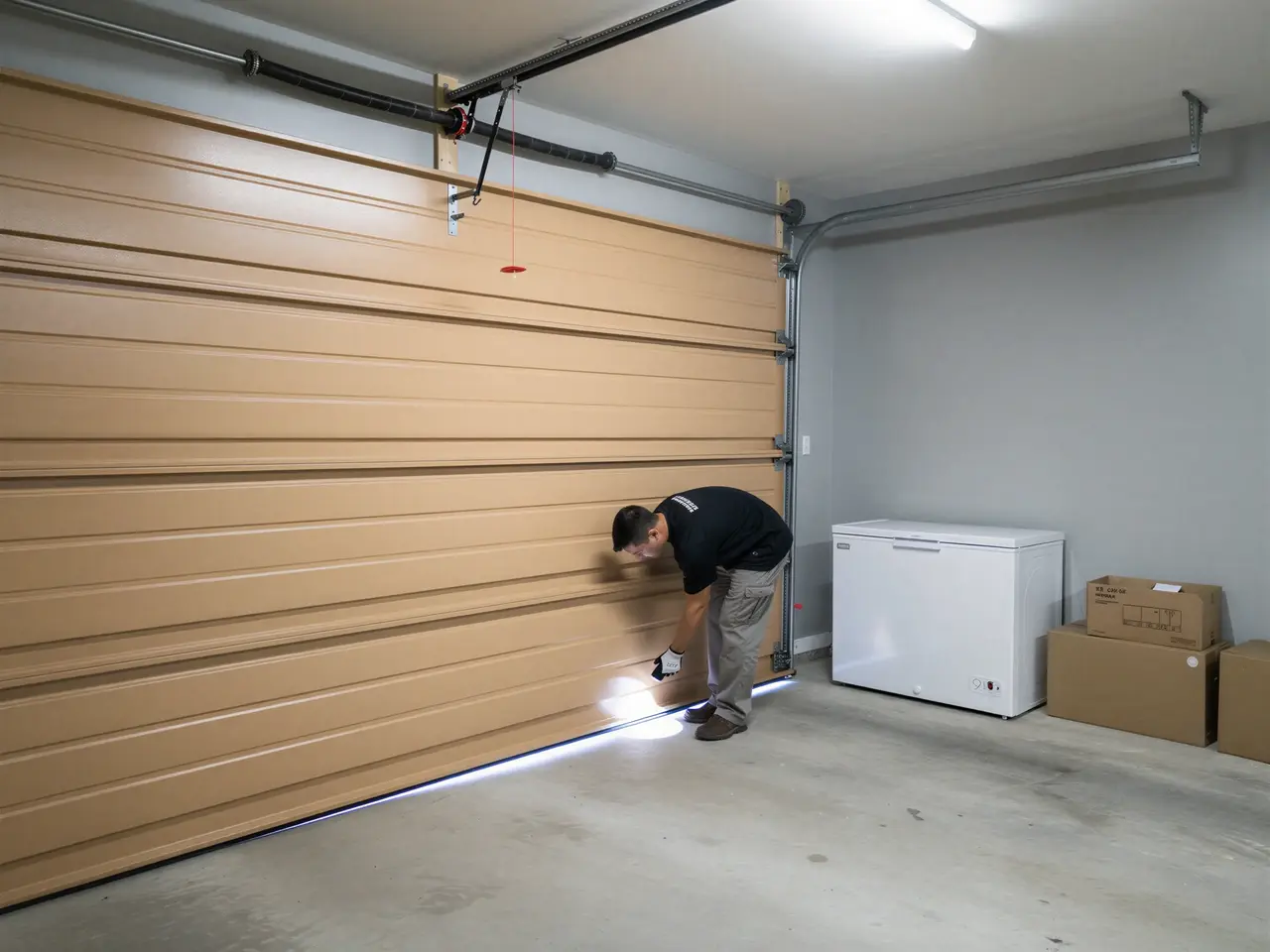
A straightforward spring swap on this kind of door - two extension springs, cables, and a tune of the track alignment - usually runs under two hours once we're on site. If the door's never been touched since it went up, we're also checking the rollers and the bottom brackets, since a seized roller from this era often hides underneath what looked like a spring problem at first. Opener swaps take longer, closer to half a day when we're also rewiring safety sensors on an older unit that never had them to code. We won't stretch a visit artificially - if the fix is quick, we tell you it's quick and bill accordingly.
Can You Do This Yourself
Replacing a stretched extension spring on a door this age is within reach for a homeowner who's comfortable with ladders and has released spring tension before - it's simpler mechanically than a torsion system. But if both springs have let go, or the door is sagging unevenly, don't climb under it. Extension springs under load can whip hard enough to break a hand or worse, and a door that's off-track with no support can come down fast. If you're not sure which kind of spring you have, that uncertainty alone is the signal to call rather than guess.
What You Pay
We don't publish a flat number here because what a 1981-era door needs varies - a clean spring swap costs less than a job where the rollers, cables, and a chain-drive opener all need attention at once. What we can tell you is that doors from this build era rarely need a full replacement; the steel panels from the early 80s were built heavier than the aluminum-faced doors that came later, so the labor is usually in the hardware, not the door itself. We'll give you the number before we start, not after.
Frequently asked questions
Why does my 1981 garage door keep using extension springs instead of a torsion bar?
That was standard for the era. Builders in the early 80s favored extension springs on horizontal tracks because they were cheaper to install at the time. Torsion systems became the default later, so unless a previous owner upgraded, a Wolf Trap house from this period likely still has the original setup.
Do you have a branch in Wolf Trap?
No. We're based in Sterling, about 8 miles out, and we drive to Wolf Trap for every call. There's no local depot, so response depends on what's already scheduled that day - we'll give you an honest window when you call rather than promise something we can't back up.
Is it worth replacing a door this old instead of repairing it?
Usually not yet. Steel doors from the early 1980s were built with heavier gauge panels than a lot of what followed, and they hold up well structurally. Most of what fails is hardware - springs, cables, rollers - not the door itself, so repair is typically the cheaper and sufficient fix.
More garage door services in Wolf Trap
Book garage door service in Sterling
Call now or request a quote - tell us what the door is doing and where you are.