
Sterling, VA · Garage Door Service
When an Old Garage Door in Sterling Still Has Life Left In It
Sterling homes built between 1938 and 2015 often carry original garage doors. Here's how cold-climate wear and build era decide if yours is worth fixing.
- Repairs & new doors
- Springs & openers
- Serving 5 nearby communities
What Changes With the Season
A door that's worked fine all summer can start binding, sagging, or refusing to close the week the first hard freeze comes through. That's not bad luck - it's steel and springs reacting to temperature swings the way they always do in a cold-severe climate band like this one. Lubricant thickens, steel contracts slightly at the panel seams, and a torsion spring that was already a few winters past its rated cycle count loses just enough tension to throw the whole door off balance. If your opener has been straining more than usual the last few weeks, or the door drops the last foot instead of settling, that's seasonal load showing up on aging hardware, not a new problem out of nowhere. We see this pattern every year here, and it's worth knowing before you call: a door that only misbehaves in cold weather usually has a spring or roller issue, not a structural one. A door that misbehaves year-round usually has something worse going on underneath the trim, and that's the one that needs an honest look rather than a quick adjustment.
The Problem
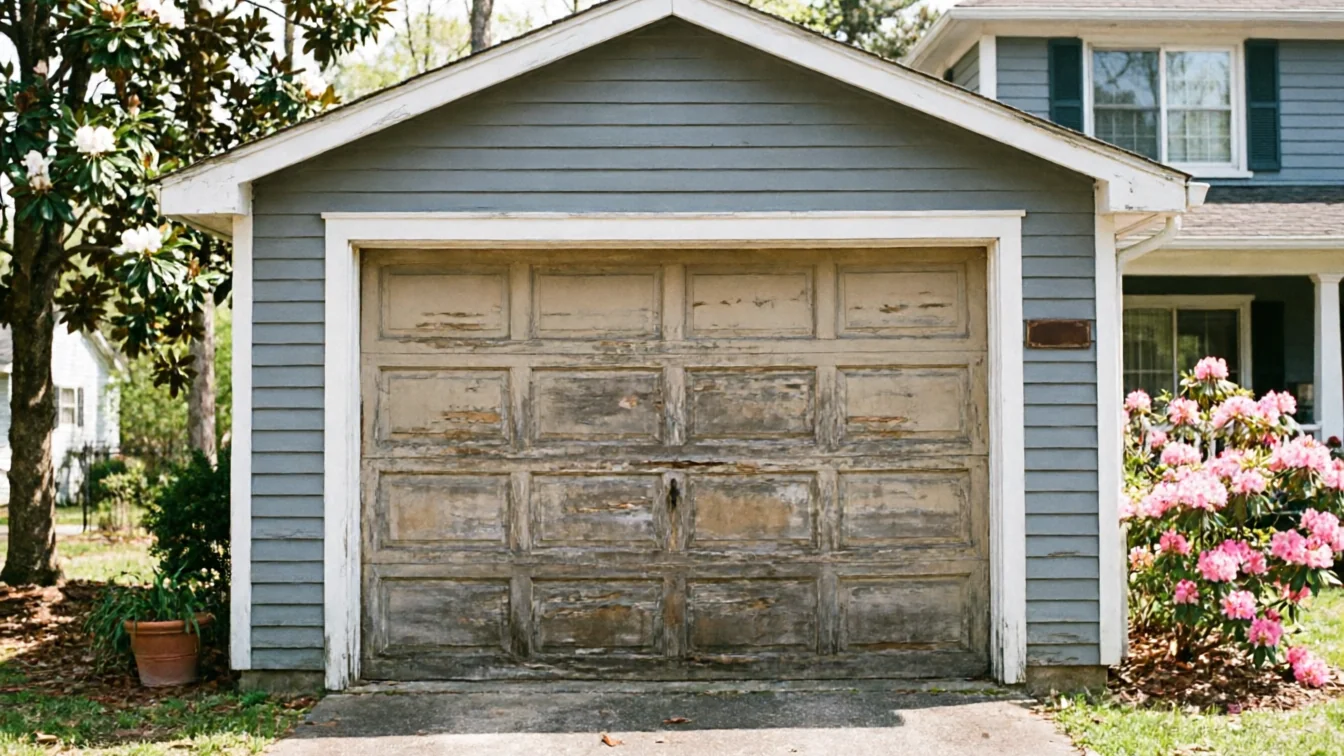
Housing in this service area was mostly built between 1938 and 2015, with the median landing around 1980, and the bulk of the stock across the 31 named communities here dating to the 1980s and 90s. That means a huge share of garage doors still in service are 30 to 45 years old - original to the house, or a one-time replacement installed decades ago. Doors from that era were built with lighter-gauge steel, single-layer skins with no insulation, and extension or torsion springs rated for far fewer cycles than what's sold today. None of that makes them junk. A well-maintained door from 1985 can still run fine. But it does mean the parts wear differently than a ten-year-old door would, and a repair that makes sense on a newer door - replacing one bent panel, say - doesn't always make sense on one where the track, hinges, and springs are all the same age and all nearing the end of their rated life at once. The honest question isn't "can this be fixed," it's "is fixing this one part going to leave three others about to fail."
What to Check
Before you decide fix or replace, look at a few things yourself. Stand the door half-open and let go - it should hold still, not drift up or slam down; drift means the springs are losing tension, common on doors original to 1980s and 90s construction. Check the bottom panel and the weather seal for rot or gaps; on uninsulated single-layer steel doors from that build era, the bottom section takes the brunt of ground moisture and cold-weather contraction and is usually the first thing to go. Run a hand along the track for rust pitting - cold-severe winters here mean more condensation cycling on exposed hardware than you'd get in a milder climate, and pitted track eats rollers fast. Listen for grinding versus popping: grinding is usually rollers, popping is usually a spring or cable. And check the opener's force settings - an old opener cranked up to compensate for a weak spring is masking the real problem, not solving it. If the door is original to a house built before the 1980s median here, and more than two of these are failing at once, that's usually the tipping point where patching stops being the cheaper option.
What the Weather Here Does to It
This area sits in a cold-severe climate band, which is harder on garage doors than people expect. Steel contracts in deep cold, which tightens tolerances on tracks and rollers that were already worn loose from decades of cycling. Moisture from snow melt and freeze-thaw gets into bottom seals and hinge points, and on older doors without a thermal break, that moisture reaches bare steel faster. Torsion springs lose a measurable amount of lifting force in sustained cold, which is why so many service calls here cluster right after the first real cold snap - it's not that the spring broke that day, it's that the cold finally exposed how little life it had left. None of this is unique to one street or one neighborhood; it's the same math for a 1985 door in this part of Virginia whether it's near Great Falls, Brambleton, or anywhere else in this climate band. The honest limitation here: we don't recommend fixing a door where the spring, track, and panel are all failing from age at the same time in this kind of cold - at that point a repair bill chases a door that's going to keep failing every winter.
Frequently asked questions
My garage door is original to a house built in the 1980s. Is it too old to repair?
Not automatically. Age alone doesn't condemn a door - a lot of 1980s and 90s doors in this area are still structurally sound steel. What matters is whether the spring, track, rollers, and panel are failing together or just one part is. One worn part is usually a fair repair. Three or four at once usually means replacement makes more financial sense.
Why does my door act up worse in winter than summer?
This area sits in a cold-severe climate band, and steel hardware reacts to that. Springs lose tension in sustained cold, steel contracts slightly at seams and tracks, and moisture from freeze-thaw gets into seals faster on older, uninsulated doors. A door that's marginal in October often becomes a real problem by January, which is why winter service calls spike here.
Is it ever not worth fixing an old door?
Yes. If the springs, track, and panels are all near end-of-life at the same time - common on doors original to houses built decades ago - patching one part just means the next part fails within a season or two. At that point, the repair bill adds up faster than a replacement would, and we'll say so rather than keep billing for patches.
Related garage door services in Sterling
More garage door guides
Book garage door service in Sterling
Call now or request a quote - tell us what the door is doing and where you are.